Research
Current project: Fascists into Communists
Book project. Grant: Across Autocracies: Mid-Level Elites from the Slovak State to Communist Czechoslovakia, Czech Science Foundation (GA ČR 26-22622S), 2026–2029. Senior Research Fellowship, Vienna Wiesenthal Institute, February–July 2026.
This project investigates how mid-level collaborators of the fascist Slovak state successfully transitioned into positions of trust and influence under the communist regime after 1948. Mid-level actors function as intermediaries between state ideology and local realities, wielding significant authority within their communities. I argue that this “muddled middle” is crucial for understanding continuities and ruptures across autocracies.
Rather than focusing on high-ranking officials or ideological architects, or framing history in binary terms, this project investigates those who embedded themselves in the fascist state and later repositioned themselves under communism. By tracing their personal and professional trajectories, we uncover patterns of adaptation, complicity, and survival, offering a new lens on how individuals navigated shifting political landscapes.
While working on the trajectories of former fascists after 1945, I have increasingly become interested in how we can capture and study political ambiguity across the different ruptures of 20th century East-Central Europe, and this is the focus of my current work.

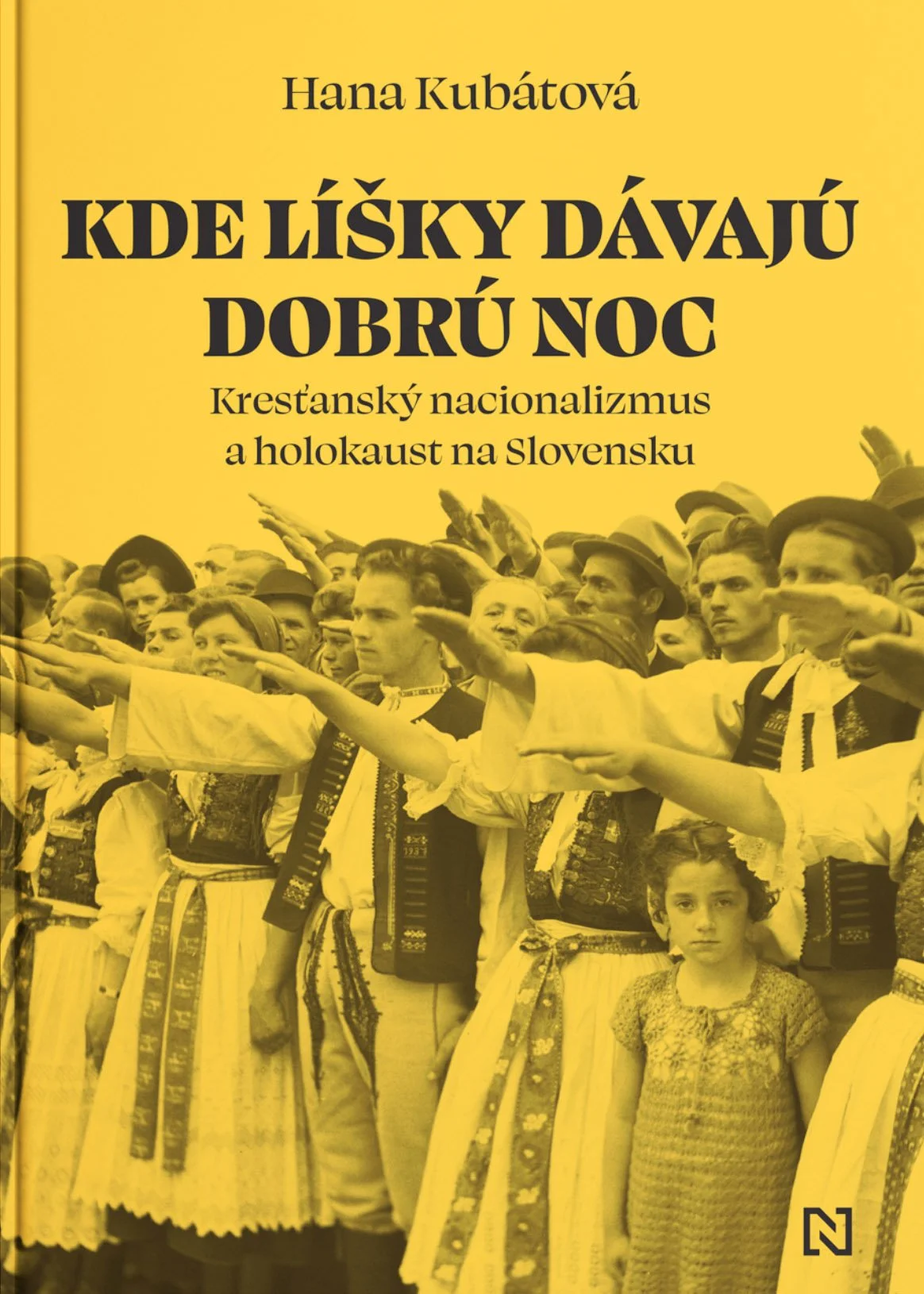
Latest book: Christian Nationalism, Nation-Building, and the Making of the Holocaust in Slovakia
Oxford University Press, 2025. Bedřich Hrozný Prize, Charles University, 2026. Slovak edition: Kde líšky dávajú dobrú noc, N Press, 2025; audiobook, 2026.
“An excellent study” (“exzellente Studie”): Andrea Löw, Bohemia 65(1), 2025.
This book tells how communal murder and betrayal intersected with nation-building during World War II. Considering ethnic cleansing as a confrontation between protagonists of the regime and civilian populations, it exposes the crucial role of Christian nationalism in cultivating complicity and collaboration.
Previous scholarship on fascism, including in Slovakia, has focused on either state actors operating from urban centers or mechanisms of violence at the grassroots level. Here, in contrast, I focus on the evolving relationship between the center and the eastern borderlands of the Slovak state, and on how the state’s ideological agenda was made practice by a broad coalition of perpetrators on the ground.
The book is the result of years of research in twenty-one archives across Slovakia, Czechia, Germany, Israel, and the United States.
Research centre and infrastructure
Violence, Trauma, and Justice. Founding director of the Transdisciplinary Research Centre for the Study of Violence, Trauma, and Justice at Charles University (2018–2023), which brought together over twenty scholars across five faculties.
Beyond Security. Senior member of Beyond Security: Role of Conflict in Resilience-Building.
Najdiexperta.cz. Founder of a public expert database connecting social science and humanities researchers with media, civil society, and industry.